
Hemp-derived THC products are becoming available in stores, restaurants, and online marketplaces. They may be available as vapes, candies, gummies, and beverages, among other forms. Many consumers do not fully understand how these products affect their brains and bodies, how intoxication from THC develops, or how long impairment can last. Additionally, many of these products look similar to other products available in the marketplace. Hemp-derived beverages, for example, may look similar to flavored seltzers or energy drinks, but many contain intoxication levels of THC – the compound that impair judgement, reaction time, coordination, and driving ability.
Responsibility.org does not take a position on the legality of intoxicating hemp products, but the organization is dedicated to ensuring that any legislative or regulatory measures include strong provisions to prevent impaired driving and underage consumption. These recommendations are included in Responsibility.org’s “Intoxicating Hemp and Cannabis Principles” document.
Hemp, THC, CBD, and Cannabis: What’s the Difference?
Hemp
Hemp and marijuana both come from the cannabis plant. Under the current federal definition, hemp is cannabis containing no more than 0.3% Delta-9 THC on a dry weight basis.
THC
THC (tetrahydrocannabinol) is the primary intoxicating compound responsible for producing impairment and a “high.” THC may be derived from hemp or marijuana. The source does not change its impairing effects.
CBD
CBD (cannabidiol) is generally considered non-intoxicating and does not produce the same impairing effects associated with THC.
Simple Takeaway: Consumers are often confused by the terminology. Hemp is not a synonym for non-intoxicating. Hemp-derived products, including beverages, often contain THC at levels that can impair consumers.
Protecting Our Roads.
Many consumers believe:
- If a product is readily available (sold in stores), it must be safe.
- Hemp beverages are the same as CBD beverages.
- Driving after consuming THC is less risky than driving after drinking alcohol.
- A driver can easily tell when they are impaired.
These assumptions are often incorrect. Research and public safety experts continue to emphasize that THC impairs driving ability and that individuals frequently misjudge their own level of THC impairment.
Driving Under the Influence is Dangerous
Whether impairment comes from alcohol, marijuana, or hemp products, the message is the same:
These products, including beverages, are impairing. And when you are impaired, you should not drive. Products containing hemp and THC can affect:
- Reaction time
- Attention and concentration
- Judgment and decision-making
- Perception of time and distance
- Coordination and motor skills
Hemp and THC affect individuals differently based on body chemistry, tolerance, dosage, consumption method, and other or additional substances (including prescription medications) used. That variability makes it difficult for individuals to accurately judge whether they are safe to drive. Many people underestimate how impaired they are.
Keeping Kids Safe.
As these products become more visible and accessible, parents and caregivers play a critical role in prevention of underage access and consumption.
Young people may assume that products sold in convenience stores, delivered through online retailers, or marketed as “hemp” are harmless. Adults can help correct those misconceptions through honest, ongoing conversations.
Conversation Starters for Families
Talk About Impairment: Help teens understand that impairment is impairment—regardless of whether it comes from alcohol, marijuana, or hemp products.
Discuss Driving Safety. Make it clear:
- Never drive after consuming THC products.
- Never ride with an impaired driver.
- Always have a plan for a safe ride home.
Practice Refusal Strategies: Encourage teens to think ahead about how they would respond if offered intoxicating products.
Store Products Securely: If adults choose to purchase hemp-derived THC products, keep them securely stored and out of reach of children and teens.
Responsibility & Understanding the Risks.
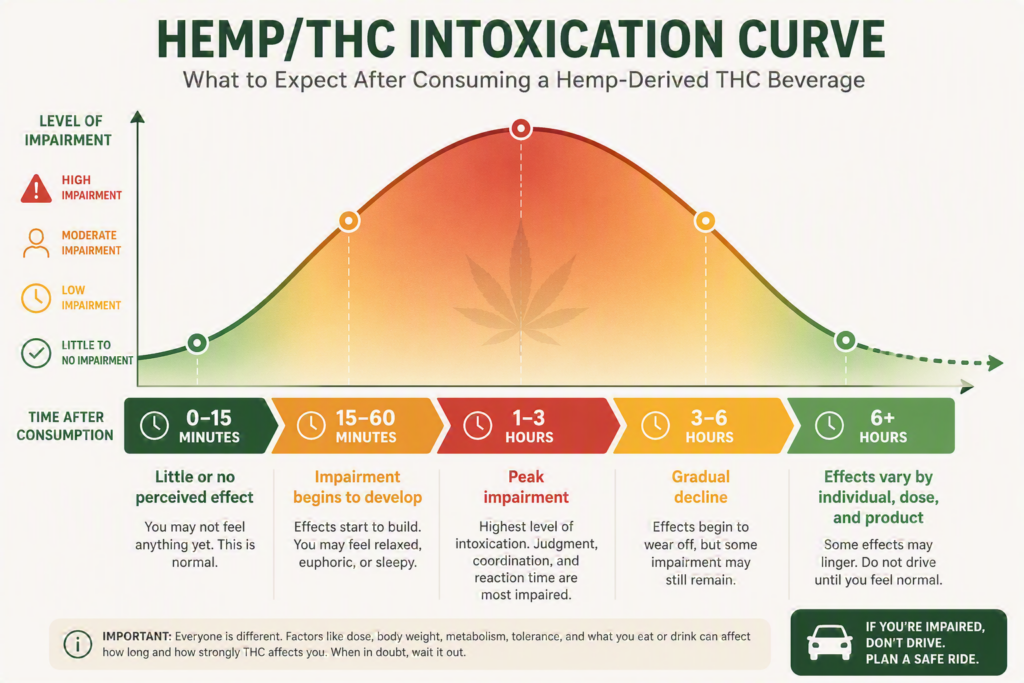
One of the biggest public safety concerns surrounding THC beverages is that people often do not recognize how intoxicated they are—or how intoxicated they may become.
The Intoxication Gap: Why Many Consumers Get It Wrong
THC beverages can have a delayed onset compared with alcohol. A person may consume a beverage, feel little effect initially, and then consume additional products before the first dose has fully taken effect. This can lead to unintended overconsumption and greater impairment.
Additional Resources
Responsibility.org hosted a webinar on the topic of impairing hemp, with an emphasis on safety and how products made from impairing hemp differ from cannabis, CBD, and alcohol beverages. The webinar discussed why these products are concerning for youth, and also the steps law enforcement can take to identify impaired drivers and keep our roads safe.
Speakers included:
- Dr. Heather Barkholtz, Assistant Professor, University of Wisconsin-Madison School of Pharmacy and the Wisconsin State Laboratory of Hygiene
- Officer Jayme Derbyshire, Coordinator for the Chemical Test for Alcohol Unit, Montgomery County Department of Police (Maryland)
- Leslie Kimball, Executive Director, Responsibility.org